28 July 2017

introducing: 'a [quote] for architecture'


sometimes a quote from a great thinker, artist, or architect validates our own thoughts or maybe causes us to stop and reconsider.  with this in mind, i'm happy to introduce; "a [quote] for architecture", where inspirational, inspiring, thoughtful, or otherwise notable words from others will be shared, i hope you enjoy and benefit.   the first....


"every great architect is, necessarily, a great poet"

- Frank Lloyd Wright


25 July 2017

presenting: 'a [word] for architecture'


presenting....


a [word] for architecture is an a for architecture project focusing on words relevant to architecture.
periodically we will feature a word that we feel has a meaning appropriate to architecture.

share your own and let us know what you think in the comments section.
thanks for looking.


25 August 2016

Community Ownership


Back in 2007 my now wife and I joined a local farm, often referred to as a CSA (Community Supported Agriculture), because we were interested in where our food comes from and wanted to be more in touch.  For an annual fee we purchased "shares" in the farm and for that year were part owners.  We could vote or even run for the farms Board of Directors who were responsible for the budget and overall direction of the farm.  This ownership also tied us to the production of the farm.  If the farm had a good year we were rewarded with plentiful fruits and vegetables at our weekly pickups throughout the season.  Likewise, if the farm had a bad year our weekly pickups would reflect that. Plus we could visit the farm whenever we would like, help the farmers, feed the chickens, pick some herbs, or just enjoy the outdoors.

Recently however, our farm has changed its structure from this community ownership model to a more traditional business model, an LLC to be specific.  Of course this change had to be approved by the current owners, all of us shareholders.  Prior to the vote a message was sent out to shareholders in favor of the change, stating how the proposed change was primarily to make financial decisions easier on the farmers, that we wouldn't see a difference in our weekly shares, and this was the way most CSA's were run anyway.  However, there was no counter argument in favor of keeping the existing structure.  To my dismay the vote was overwhelmingly approved with just two dissenting votes, ours and that of one other couple.

We remain members of the farm.  To one of the points made in the arguments for the change, however, the point that changes in the weekly shares wouldn't be noticed, I will have to argue.  While the specific amount or types of fruits and vegetables may or may not have changed, and this is a lesser issue in the big picture, there is a disconnect from the farm.  There is less of a relationship between the farms success and its members.  The community bond and tie to the original CSA created a sense of ownership far stronger than the actual ownership.  Community ownership gives people purpose and motivates those to participate and work to build a better community and creates a sense of pride, regardless of how successful a specific initiative may be.  However, when one "buys in" and becomes a mere customer, of an LLC for instance, this is lost.  We live in a society that lives on the mantra that "the customer is always right".  With fee-for-service when we lay out our hard earned money we expect to get what we paid for, emphasis on expect, and if we don't get what we expect or "what we paid for", we demand a refund, replacement, or some other remedy to "make us whole."

Of course this relates to more than my example of the CSA turned LLC.  We live in a world where everything is sponsored.  Sports arenas and sporting events are a prime example but it extends to all of our recreation, culture, food, even our education and health care.  This is concerning, as well, because we are raising a generation that doesn't know any different.  As part of my professional life I volunteer with ACE, an organization which connects high school students with professionals in Architecture, Construction and Engineering firms, where each year student teams present a project of their own design. I have seen countless times where students propose a mall or a sponsorship opportunity. They often have to be prodded to include any amenity that is purely for the community benefit.  As design professionals it is our duty to stress the importance of community ownership within our own communities.  While we are doing this hopefully we can encourage younger generations to build the community they want and demonstrate that this doesn't come with a purchase or a corporate sponsorship but with engagement and an ownership of a different type.


15 August 2016

Building and maintaining sustainable communities: The short and long-term impacts of our actions.

We are all part of, participate in and serve as the foundation of the communities we live in.  The decisions we make, the policies we adopt and the actions we take all have an impact on our communities and those around us.  If we want to move towards more sustainable communities we must consider what that impact (from our decisions, policies, and actions) will be and if those outcomes are desired.

See the full article at the New York Real Estate Journal website here

https://cre.nyrej.com/building-maintaining-sustainable-communities-short-long-term-impacts-actions-erik-heuler/ 

27 June 2016

New Allen Field Office

New Allen Field Office

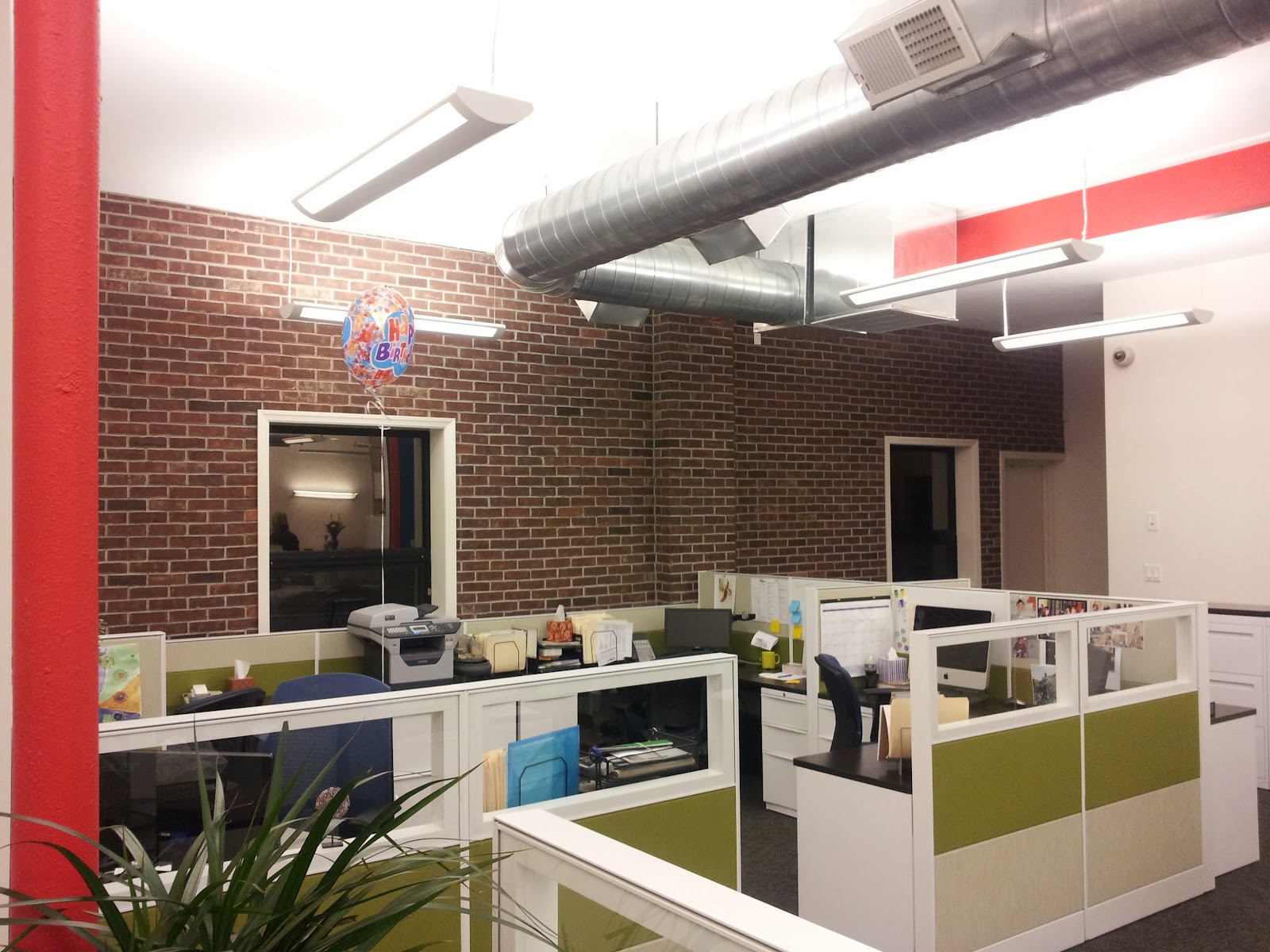
Allen Field Innovative Design and Manufacturing uses variety of materials, textures, and colors to enliven their new corporate office on Long Island.  The renovation of this small office building in the suburbs of New York City gives Allen Field a new home that better represents its corporate vision while providing a comfortable work environment.  A nondescript office and warehouse in Brightwaters, NY was transformed into the new corporate office with a simple plan, new windows, glass garage doors, interior finishes and furniture.

A new centralized airlock entry provides a formal entrance to both Allen Field and its prototyping partner.  A large glass wall, with an obscured view into the meeting room beyond, greets visitors and is accessible to both offices it divides.  By providing a multi-use space, to be shared between offices, each office is allowed greater area for daily activities.  The glass walls not only announce entry but allows the meeting room to seal some daylight from the south entry and provide a counter to signage within the foyer.

Glass Enclosed Conference Room Adjacent to Entry, (Obscured glass & signage added since photo was taken.)

Private offices line the buildings south side while additional interior glazing allows daylight to penetrate into the large open office area beyond.  Windows to the west provide additional light as does a large glass roll-up garage door to the north.  The north side of the building also includes bathrooms, an open shipping area, that also allows light into the open office, and the kitchen and employee lounge.

The large glass garage door at the kitchen and employee lounge help to bring in the outside by allowing even north daylight to flood into the space while offering an opportunity for employees to connect to the outside.  This door opens onto a small landscaped area, abutting a residential property, allowing employees to literally open up the office to the outside, providing fresh air and the opportunity to dine al fresco or even catch a glimpse of nature while working.  This space also provides outdoor space for events hosted at the office, effectively enlarging usable space for clients and guests.

Glass Garage Door at Employee Lounge


Inside, color and material variation add visual interest and highlight features of the building.  The existing steel structure is highlighted with bright red paint not only to showcase the buildings structure but also to highlight the work floor and the circulation zones around it.  Visually bringing you around the space the structure boldly states its presence.  On the west, exterior, wall, a brick veneer relates to the existing masonry construction and provides a texture to the space in contrast to the gypsum board ceilings and walls.  A bright blue, the Allen Field corporate color, saturates the spaces opposite, east, wall and leads into the shared conference / meeting room, rounding out the space.

New mechanical systems even get a chance to make an elegant yet bold statement with overhead exposed spiral-duct and reflects off of indirect pendant fixtures hanging below.  Brightly finished ceiling and walls provide ample light throughout the space while minimizing the number of fixtures required.

The bold use of color is apparent within the space and adds dimension and interest to this relatively small corporate office.  With daylight, texture and color a previously dreary warehouse has been transformed into an exciting modern work space.


Office Interior


19 August 2015

An Architects Alphabet - Interview on Blueprint


I was recently interviewed about A is for Architecture, my Architecture children's book.  You can read the entire interview here to get a behind the scenes look at what went into the book.

http://h2mblog.com/2015/07/01/an-architects-alphabet/ 

"A is for Architecture" is currently available at lulu.com and amazon.com.

Thanks for reading,

10 April 2014

A is for Architecture on Exhibit


This month, "A is for Architecture", my recently published architectural children's book, will be on exhibit at the American Institute of Architects Headquarters in Washington DC,  as a part of the 2014 AIA Emerging Professionals Annual Exhibition.  For the exhibition, which is on view until April 30, 2014, the book was transformed into a poster where all twenty-six hand drawn illustrations each of which is accompanied by an architectural term, are displayed as a single sheet taking the viewer through the alphabet in a fun read that is pleasant and instructive.  I do hope this will be a fun place to stop among the 50 plus other projects that are part of the exhibition, the majority of which, understandably, are building projects.  

It is an unfortunate fact that many Americans receive no architectural instruction, are unaware of even the most notable architects, and often times, while they may appreciate specific buildings, don't find value in the profession.  Architecture is a part of our everyday lives, it is where we work, live, and play.  Therefore, it is important that we are all aware of the environment around us, both natural and built, as well as the people that help shape that environment and design the places we enjoy.

"A is for Architecture" was written, illustrated, and published to offer a way for parents, architects or otherwise, to introduce their children to architecture and start the conversation on being aware of, and having an appreciation for, the built environment.  Although written as a children's book, it is suitable for those of any age.  While readers are sure to recognize many of the buildings included, some lesser known, but still important, buildings and architects are featured.  The hope is that each drawing may peek an interest in architecture and invite the reader to explore further.  Teaching children about architecture in a fun and interactive way increases their awareness, interest, and, hopefully, participation.  This can only benefit the profession, the built environment, and society. 

"A is for architecture is available online at lulu.com and amazon.com

Visit the exhibition site here.